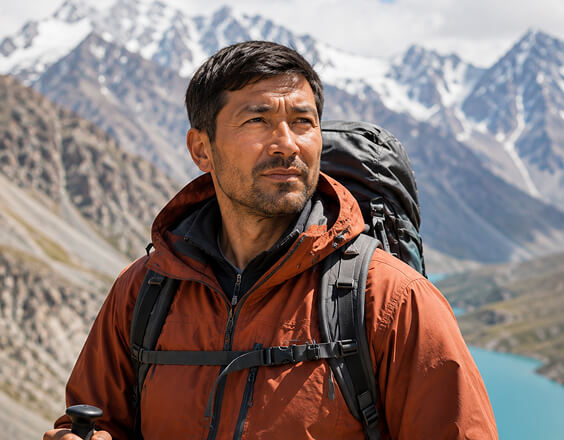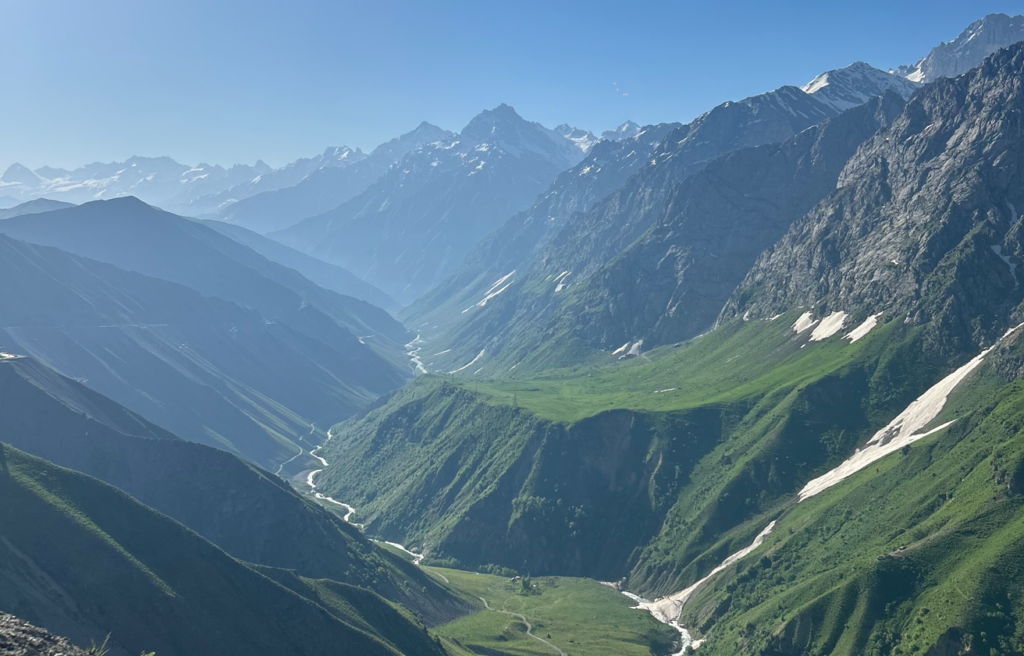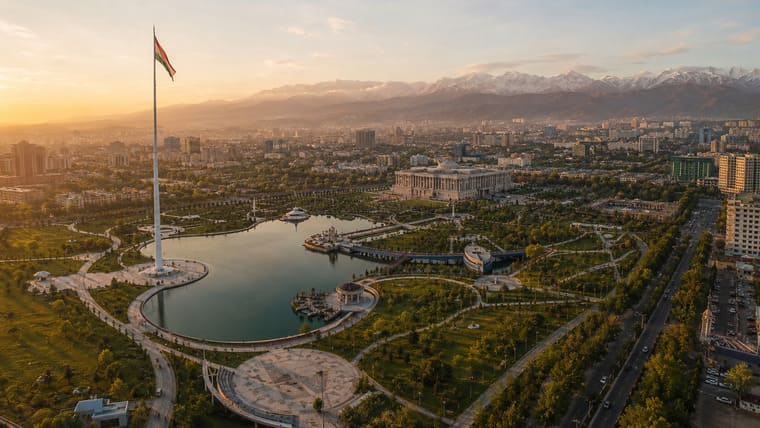
Tajikistan is best discovered through a combination of the city, ancient history and mountain routes. In Dushanbe it is worth setting aside time for the central avenues, the museums and the markets; near the capital, take a trip to Hisor; and for the country’s greatest natural experiences head to Iskanderkul, the Seven Lakes or the Pamirs.
If you are deciding what to see in Tajikistan in a week, the best route depends on the main purpose of the trip. For a first visit it is convenient to combine Dushanbe, Hisor, Iskanderkul, Penjikent and the Seven Lakes. Travellers who come above all for the high mountains should give most of the week to the Pamirs.
What to see in Tajikistan on a first trip
The country’s main destinations differ greatly from one another. Dushanbe suits an introduction to modern culture and history, the Fann Mountains to lakes and short mountain trips, and the Pamirs to a multi-day road journey.
| Place | Why go | How much time to allow |
|---|---|---|
| Dushanbe | architecture, museums, markets, city life | 1–2 days |
| Hisor | the historical complex and the fortress | half a day — 1 day |
| Iskanderkul | a mountain lake and the scenery of the Fann Mountains | 1–2 days |
| The Seven Lakes | a chain of differently coloured mountain lakes | 1–2 days |
| Penjikent | ancient history, Sarazm, a convenient base for the Fann Mountains | 1 day |
| The Pamir Highway | high-altitude roads, valleys and settlements | from 4–5 days |
| Khorog | the main town of the Pamirs, the botanical garden, a base for onward trips | 1–2 days |
| Kalaikhum | the Panj valley and an important stop on the road into the Pamirs | 1 day |
On a short trip it is better to concentrate on Dushanbe and the nearest destinations. With a week to spare, it becomes possible to add the Fann Mountains or to build a separate route through the Pamirs.
What to see in Dushanbe
Dushanbe deserves at least one full day. Two days will allow you to visit the main museums, walk the central part of the city at a relaxed pace, look in at a market and still leave time for an evening stroll.
Most of the main city sights lie fairly close together, so it is convenient to begin exploring the capital from the centre.
Rudaki Park and Rudaki Avenue
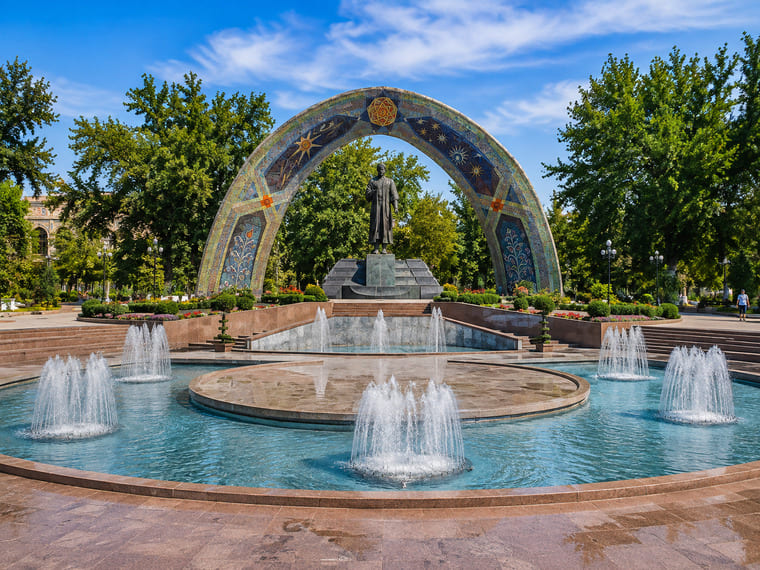
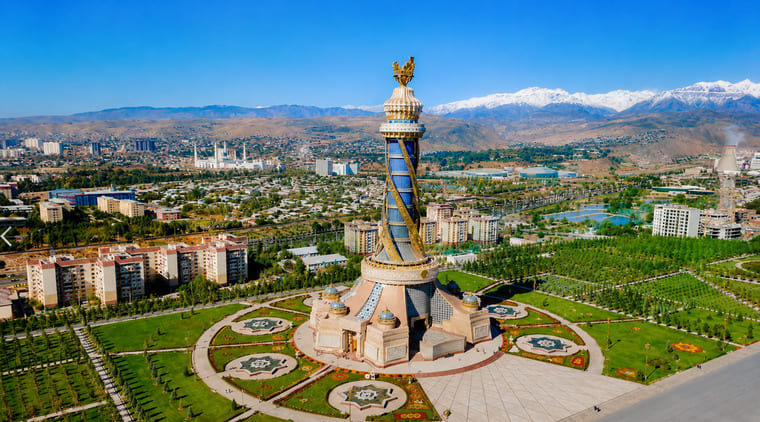
Rudaki Avenue runs through the central part of Dushanbe and links several key city spaces. It is a good place to begin a walk, take in the administrative architecture, the parks, the monuments and the everyday life of the capital.
Rudaki Park lies in the centre and suits an unhurried walk between the museums and the squares. In the evening the central part of Dushanbe is especially lively.
Dusti Square and the Ismoil Somoni monument
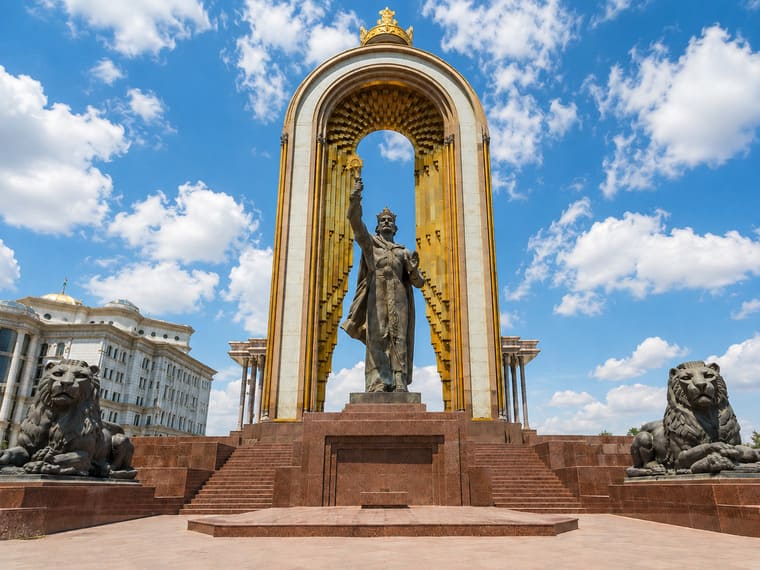
Dusti Square is one of the capital’s principal ceremonial spaces. Its central landmark is the monument to Ismoil Somoni, one of the key historical figures of Tajik statehood.
From the square it is convenient to continue the route along the central streets and parks.
The National Museum of Tajikistan
The National Museum gives a coherent picture of the country’s history, nature, archaeology, culture and art. Allow around two hours for a first visit.
The museum is particularly useful before travelling through the regions: after seeing the collection, the historical sites of Penjikent, Hisor and the Pamirs make far more sense in context.
The National Museum of Antiquities of Tajikistan
The museum’s principal exhibit is the famous statue of the Buddha in Nirvana, found during archaeological work in Tajikistan.
The collection covers the ancient cultures of the region and shows how important a role the territory of present-day Tajikistan played on the trade and cultural routes of Central Asia.
Navruzgoh
Navruzgoh is a large complex used for festivals, concerts and national events. The space is striking for its scale and its modern architecture.
It is at its liveliest during major state and cultural occasions.
Dushanbe Mosque
The great congregational mosque is among the most prominent works of modern architecture in the capital. When visiting, bear in mind the rules of dress and conduct that apply at religious sites.
Mehrgon Bazaar
Mehrgon is the place to discover the country’s produce and food culture. Fresh fruit, nuts, dried fruit, spices, vegetables and other local products are all sold here.
It is convenient to leave the market for the afternoon, or to combine it with buying edible gifts before your flight home.
If you have one day for the capital, the main points can conveniently be brought together in a Dushanbe sightseeing tour.
Hisor Fortress — what to see near Dushanbe
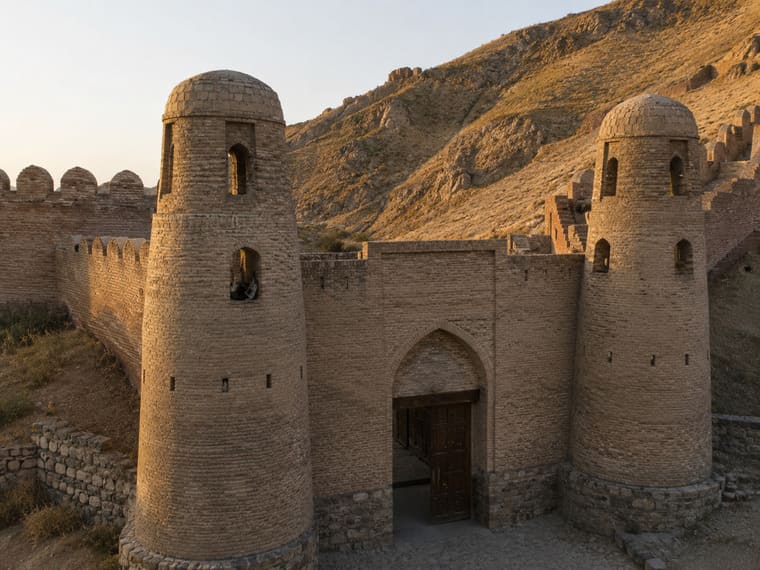
Hisor lies about 30 kilometres from Dushanbe and suits a short trip out of the capital. The main attraction here is the historical and cultural complex with its monumental fortress gates, madrasa and museum buildings.
For centuries Hisor stood on important routes across Central Asia. The present-day complex helps you picture the architecture and layout of the historic settlement, and the road from Dushanbe takes relatively little time.
Allow a few hours to look round. The trip fits well on your second day in the capital: cover the remaining city sights in the morning, then head out beyond Dushanbe.
A trip like this can be arranged as a tour to the Hisor Fortress.
Iskanderkul — the great lake of the Fann Mountains
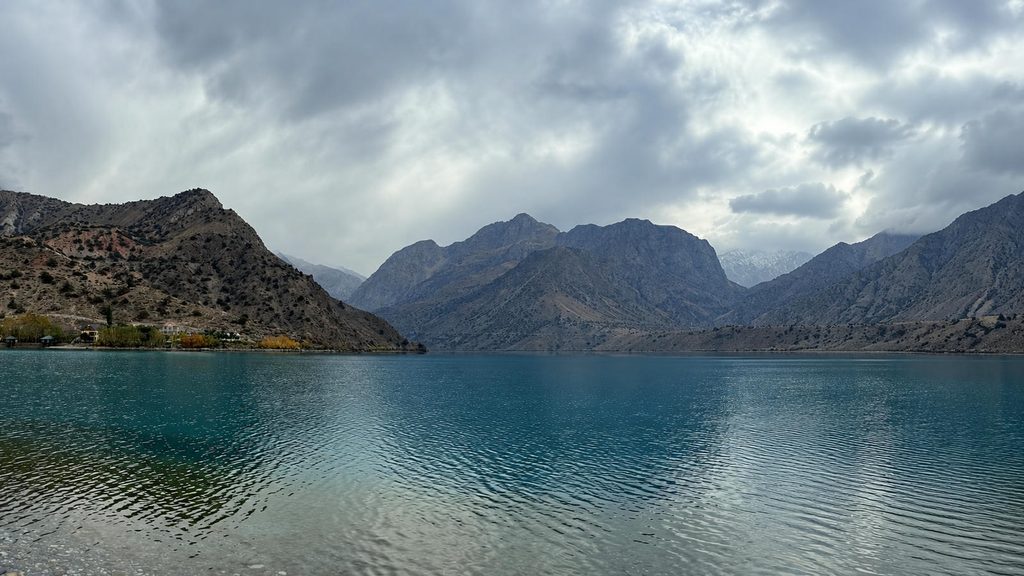
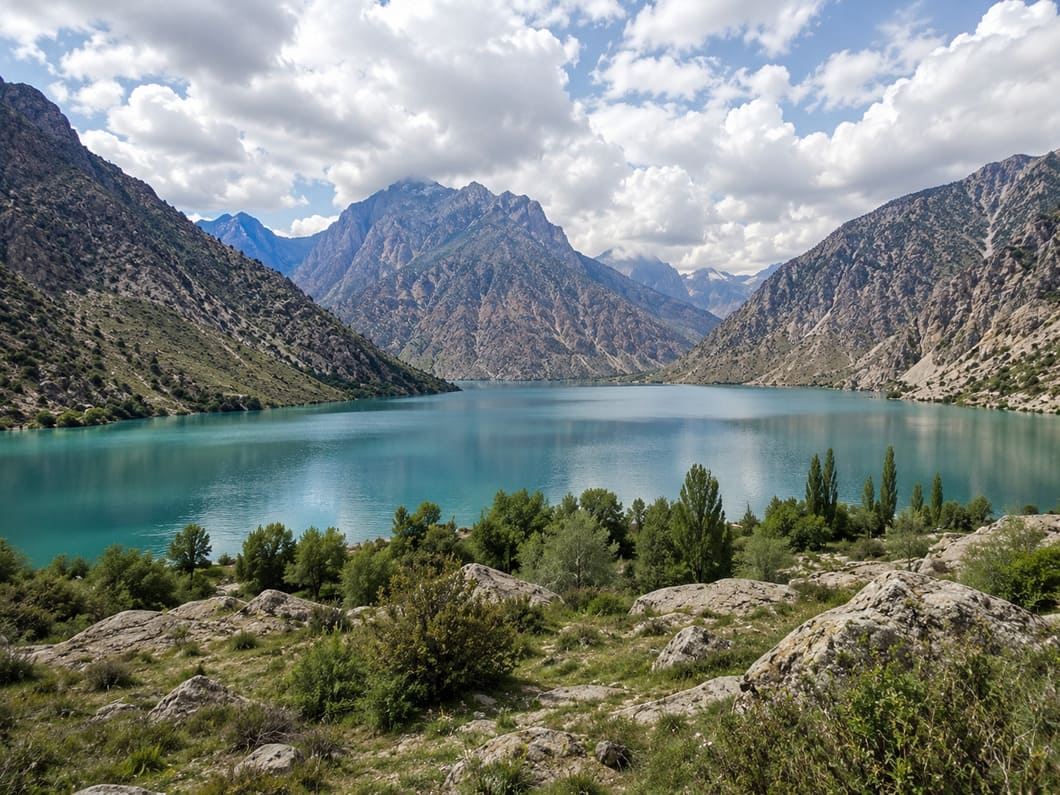
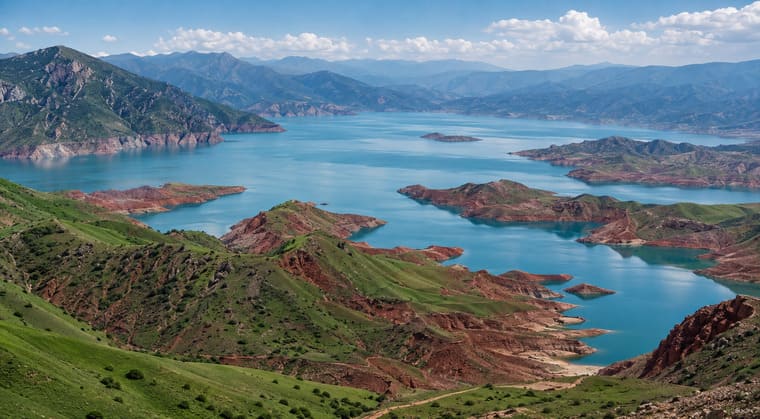
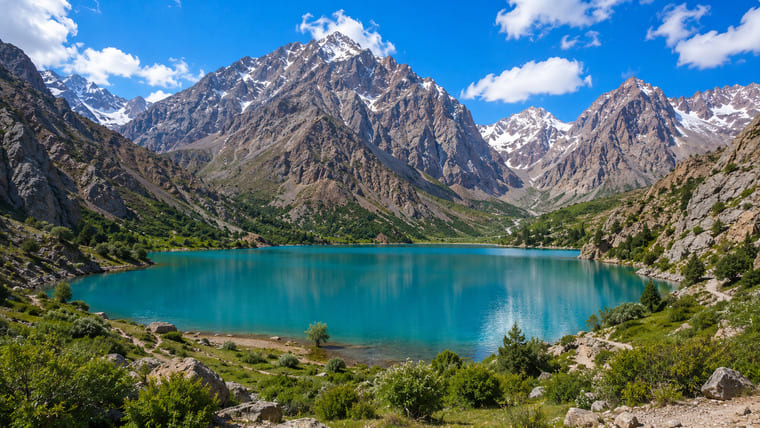
Iskanderkul is one of the most recognisable natural sites in Tajikistan. This high-altitude lake lies in the Fann Mountains, ringed by massive slopes that come right down to the water.
People come here for the panoramas, for walks along the shore and for a trip into the mountains without a long, demanding route. Waterfalls, gorges and short nature trails lie in the surrounding area.
Iskanderkul can be visited on one full day from Dushanbe. For a more relaxed introduction to the Fann Mountains, it is better to stay overnight and continue the route towards Penjikent and the Seven Lakes.
The road runs through mountain terrain, so when planning it is best to work from travel time rather than distance on the map alone.
For a one-day trip from the capital, the Iskanderkul lake tour.
The Fann Mountains and the Seven Lakes
The Fann Mountains suit travellers who want to see high-altitude lakes while keeping the route relatively compact. Here you can combine road trips, short walks and full trekking.
One of the region’s best-known destinations is the Seven Lakes, or Haftkul.
The Seven Lakes
The Seven Lakes lie in the valley of the Shing river, south of Penjikent. They sit at different altitudes and differ in the shades of their water, which change with the light and the season.
The route passes through the lakes one after another. Part of the way can be covered by car; to see them in more detail, allow for sections on foot.
A full day is a comfortable allowance for the trip from Penjikent. At a slower pace, with walks through the valley, you could stay in the region longer.
Trekking in the Fann Mountains
The Fann Mountains offer routes of varying length — from short walks by the lakes to multi-day crossings between valleys and passes.
An ordinary tourist trip requires no special mountaineering preparation: the main natural sites can be seen by road with short sections on foot.
Anyone planning full trekking should settle in advance the difficulty of the route, the altitude of the passes, the overnight stops and the seasonal conditions.
Penjikent — ancient history and the gateway to the Fann Mountains
Penjikent fits conveniently into a route alongside the Seven Lakes. The town lies in the west of the country and serves as an important starting point for journeys through the Fann Mountains.
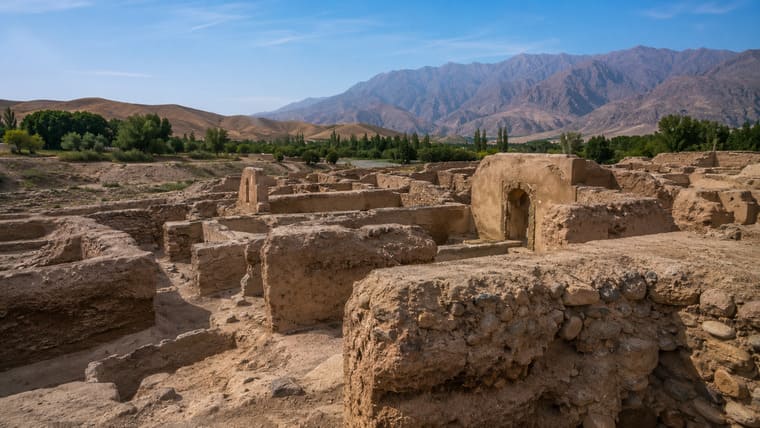
The main historical site is the ruins of ancient Penjikent. In the early Middle Ages a large Sogdian city stood here, with residential quarters, temples and a developed urban culture.
Archaeological finds from the region help make sense of the history of Sogd and of the trade routes that linked Central Asia with neighbouring regions.
Sarazm
Not far from Penjikent lies Sarazm, an ancient settlement whose history goes back several thousand years. The archaeological complex is inscribed on the UNESCO World Heritage list.
Sarazm is conveniently combined with Penjikent in a single day. Such a day complements the natural part of a Fann Mountains trip especially well: after the lakes, the traveller gains the full historical context of the region.
The Pamirs and the Pamir Highway
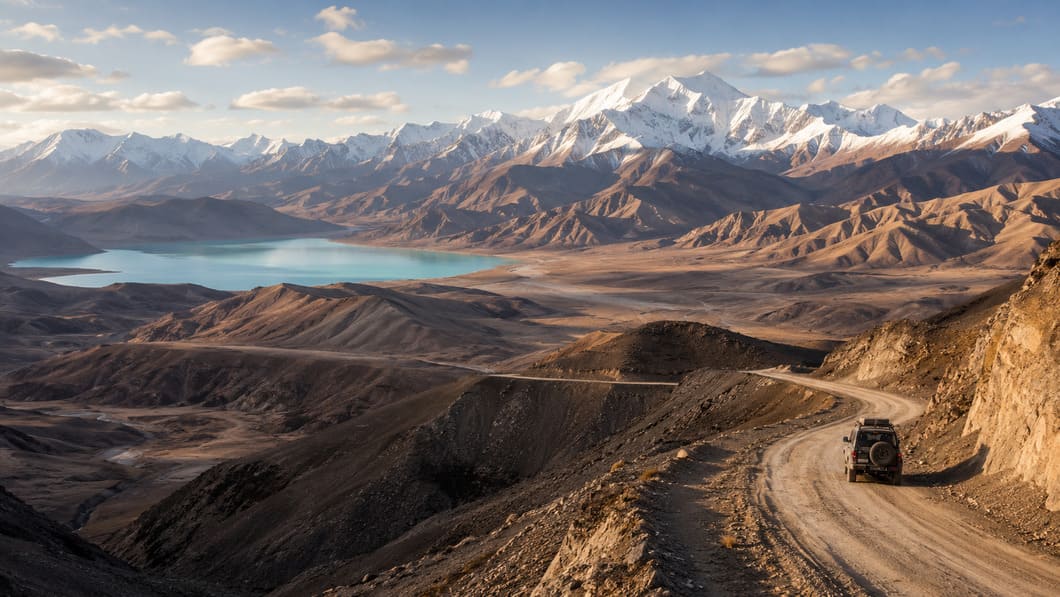
The Pamirs hold a special place among the sights of Tajikistan. Here the road itself becomes the main part of the journey: high-altitude valleys, rivers, passes, small settlements and abrupt changes of landscape accompany the route for several days.
The Pamir Highway is chosen by travellers ready to spend a great deal of time on the road for the sake of sweeping mountain scenery.
Kalaikhum
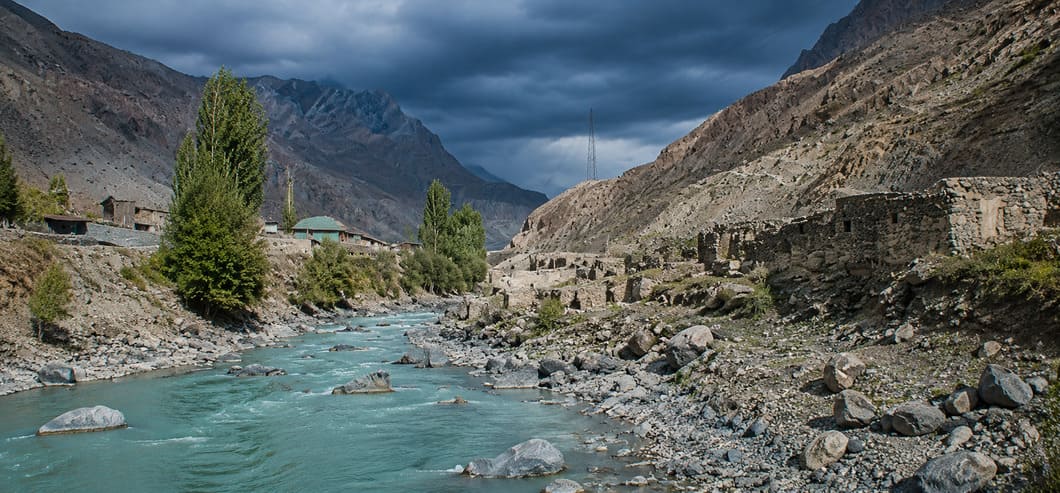
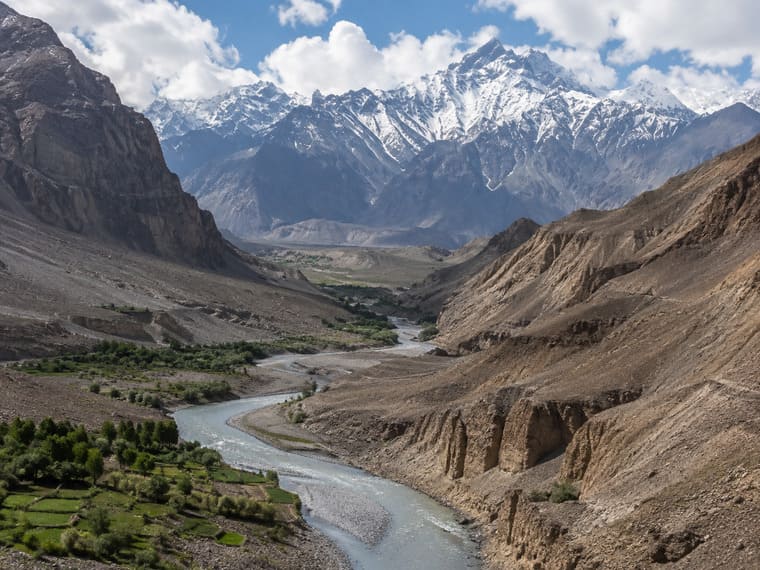
Kalaikhum is one of the main stops on the way from Dushanbe towards the central Pamirs. The settlement lies in the valley of the Panj river and is often used as an overnight stop between long transfers.
Even on the approaches to Kalaikhum, the urban landscape gives way to deep river valleys and mountain roads.
Khorog
Khorog is the administrative and cultural centre of the Gorno-Badakhshan Autonomous Region. The town is ringed by high mountains and serves as the main base for onward routes through the Pamirs.
One of Khorog’s best-known sites is its high-altitude botanical garden. Routes into the Wakhan valley and other parts of the region also continue from the town.
The Wakhan Valley
The Wakhan is chosen for its historic fortresses, small settlements, high-altitude scenery and views over the Panj valley.
Distances between points here are comparatively large, so the route is best built with overnight stops and pre-arranged halts.
High-altitude lakes and passes
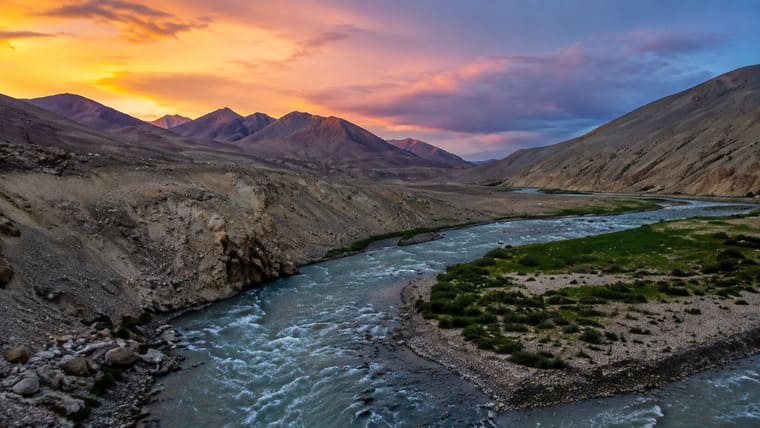
The further east the route goes, the higher the terrain becomes. In certain parts of the Pamirs, travellers come upon high-altitude lakes, broad plateaus and passes several thousand metres up.
Trips of this kind call for more careful planning of both time and physical effort. At altitude it is worth giving the body time to adapt, and the programme should allow for spare time on the road.
How many days you need for the Pamirs
For a short introduction, allow at least four days. This makes it possible to drive the route from Dushanbe through Kalaikhum towards Khorog and to see the characteristic landscapes of the western Pamirs.
To get to know the Pamir Highway, consider the Dushanbe — Khorog — Kalaikhum route over four days.
Six days allow you to slow the pace and spend more time in the valleys and settlements. For that format, the six-day journey from Dushanbe to Kalaikhum and its surroundings.
With eight to twelve days you can build a deeper route through the Gorno-Badakhshan Autonomous Region, with additional stops and trips into individual valleys.
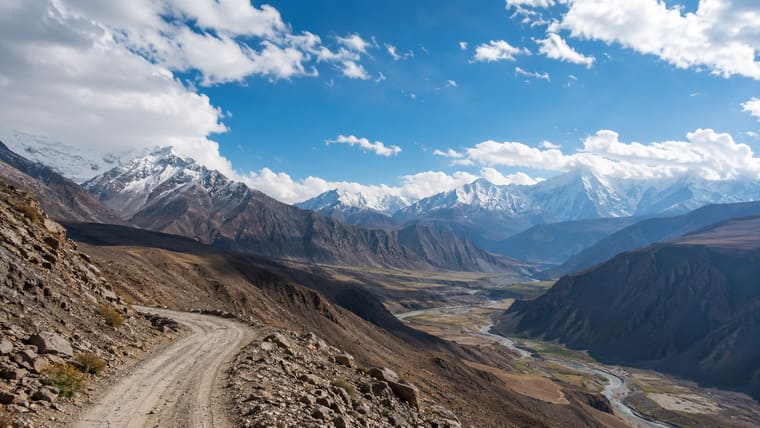
What to see in Tajikistan in a week
Seven days allow you to put together a full route taking in the capital, historical sites and the mountains. For a first trip it is convenient to make the Fann Mountains the main natural component: the transfers work out more compact than on a full journey through the Pamirs.
Day 1. Dushanbe
After arriving, head for the central part of the city. Walk along Rudaki Avenue, Dusti Square and Rudaki Park, and visit one of the national museums.
In the evening you can dine in the city and leave time for a stroll around the centre.
Day 2. Dushanbe and Hisor
Devote the first half of the day to the capital’s remaining sights: a museum, the mosque or the Mehrgon market.
After lunch, set off for Hisor. A few hours is enough for the historical complex.
Day 3. Iskanderkul
Set out early for the Fann Mountains. The main goal of the day is Iskanderkul and the surrounding area.
If you are continuing westwards, it is more convenient to carry on towards Penjikent so as to cut down on backtracking.
Day 4. Penjikent and Sarazm
Devote the day to historical sites. See ancient Penjikent and the archaeological complex at Sarazm.
A day like this gives you a breather between long nature routes and adds historical context to the trip.
Day 5. The Seven Lakes
Set aside a full day for the valley of the Seven Lakes. Spread the stops along the route, leaving time for short walks and photographs.
In the evening, return to Penjikent or stay closer to the mountain route depending on what comes next.
Day 6. Return to Dushanbe
The transfer is worth planning as a distinct part of the journey. Mountain roads take time, so it is best to leave the day with some slack.
Along the way you can make several short stops at scenic spots.
Day 7. Dushanbe
It is convenient to keep the last day unhurried. Visit the market, buy gifts, walk around the centre and get ready for your flight.
This margin is especially welcome after several days of mountain transfers.
If the main aim of the trip is the Pamirs, a week-long route is built differently: one day is given to Dushanbe, and the bulk of the time to the road through Kalaikhum and Khorog. The Fann Mountains are better left for a future visit.
Which to choose: the Fann Mountains or the Pamirs
Both regions give a vivid impression of mountain Tajikistan, but they call for different amounts of time.
| Criterion | The Fann Mountains | The Pamirs |
| Best length | 2–4 days | from 4–6 days |
| Main experiences | lakes, gorges, trekking | high-altitude roads, valleys, passes |
| Main places | Iskanderkul, the Seven Lakes | Kalaikhum, Khorog, the Wakhan |
| Pace of the trip | relatively compact | many long transfers |
| For a first week-long route | easy to combine with Dushanbe | better made the main destination |
| Format | car + walks | road expedition |
For a first week-long trip with a varied programme, the Fann Mountains are the easier choice. The Pamirs are worth choosing when the high-altitude road and remote districts are themselves the main purpose of the journey.
When is the best time to visit Tajikistan
The choice of season is bound up directly with the route.
Spring
Spring suits Dushanbe, Hisor, the historical sites and trips through the lower-lying areas. At this time nature is changing rapidly and the summer heat is still ahead.
How accessible the high-altitude routes are depends on the particular area and the state of the roads.
Summer
Summer is the main season for trips into the high mountains. This is when people plan the Pamirs, the Fann Mountains, trekking and multi-day road routes.
Even in summer the temperature in the mountains differs from Dushanbe, so clothing for cool weather will come in useful.
Autumn
Early autumn suits the city, historical routes and some of the mountain destinations well. Visitor numbers gradually fall, while daytime temperatures in many areas remain comfortable.
The closer winter comes, the more closely conditions on the high-altitude roads should be watched.
Winter
In winter it is convenient to build the main programme around Dushanbe, its museums, its food and the accessible areas near the capital.
High-altitude travel calls for separate preparation and precise information on the state of the roads.
What travellers from Russia should bear in mind
A traveller from Russia will find it helpful to divide preparation in advance into documents, money, communications and transport.
Documents and entry
Before the trip, check the entry rules in force on your travel dates, which documents are accepted, and the registration requirements for a longer stay.
Rules can change, so for a final check it is best to use official government sources immediately before departure.
Travel to the Pamirs
Special access rules apply to certain territories of the Gorno-Badakhshan Autonomous Region. On a Pamir route, the question of the necessary permits should be settled in advance and tied to the specific programme of the trip.
Money
The national currency is the somoni. Dushanbe has more banking and currency-exchange infrastructure than the remote mountain areas.
For the Pamirs, the Fann Mountains and small settlements it is useful to carry an adequate supply of cash. Whether a particular Russian bank card can be used is worth checking before the trip with your bank and your host organisation.
Language
Russian is widely used in everyday communication, particularly in Dushanbe and in the tourism sector. In remote areas Tajik remains the main language of communication, and in some parts of the Pamirs local languages are widespread.
Communications and navigation
For trips beyond the capital it is worth downloading offline maps in advance. Mobile coverage is more reliable in larger settlements than on remote stretches of mountain road.
Save your route, your hotel address and the main points on your phone before heading into the mountains.
Transport
Getting around Dushanbe is convenient by car and by public transport. Hisor suits a short trip by car.
Iskanderkul, the Seven Lakes and the Pamirs above all call for more careful planning of the vehicle and the route. In the mountains, 150 kilometres can take considerably longer than the same distance on the plains.
How many days to allow for Tajikistan
The length of a trip is best decided by the number of regions rather than the number of sights.
2–3 days
A route around Dushanbe with a trip to Hisor works well. This is a convenient format for a short visit or a stopover between other Central Asian countries.
4–5 days
You can add Iskanderkul and get a combination of the city, history and mountain scenery.
Another option is to make the Pamirs the main destination and set off from Dushanbe through Kalaikhum towards Khorog.
7 days
For a first visit this sequence works well:
Dushanbe → Hisor → Iskanderkul → Penjikent → the Seven Lakes → Dushanbe.
It gives a varied programme and does not require spending the whole week in a car.
10–14 days
With this much time you can explore the Pamirs in more detail, or combine Dushanbe, the Fann Mountains and several remote areas.
The route is best drawn up with spare days, especially where there are many mountain transfers.
How to plan a route through Tajikistan
Start from the number of days and choose one main mountain destination. On a trip of up to a week it is easier to put the Fann Mountains or the Pamirs at the centre of the programme, then add Dushanbe and the nearest historical sites.
Dushanbe is best left to the start of the route: here you can rest after the flight, get to know the country’s history and prepare for the road ahead. Hisor is easily added as a separate half-day.
For the Fann Mountains it makes sense to link Iskanderkul, Penjikent and the Seven Lakes into one continuous trip. If you choose the Pamirs, the programme is built around the road through Kalaikhum, Khorog and the high-altitude areas beyond.
It is convenient to spend the last night before an international flight in Dushanbe. This order leaves a margin of time after long road transfers.
You can compare the length and geography of the ready-made programmes in the Tajikistan tours.
Which route to choose for a first trip
If you want to see different sides of the country in a single trip, start with Dushanbe, add Hisor and spend several days in the Fann Mountains. Such a route combines the capital, historical sites, lakes and mountain landscapes.
If high-altitude roads and remote valleys are to be the defining experience, choose the Pamirs and give them the greater part of the journey.
In a week it is better to see one mountain region thoroughly than to try to fit the Fann Mountains and the Pamirs into a single packed route.
If you would like a trip with transfers, excursions and outings into the mountain areas all in one programme, Sayohat Travel offers both ready-made and tailor-made tours of Tajikistan.