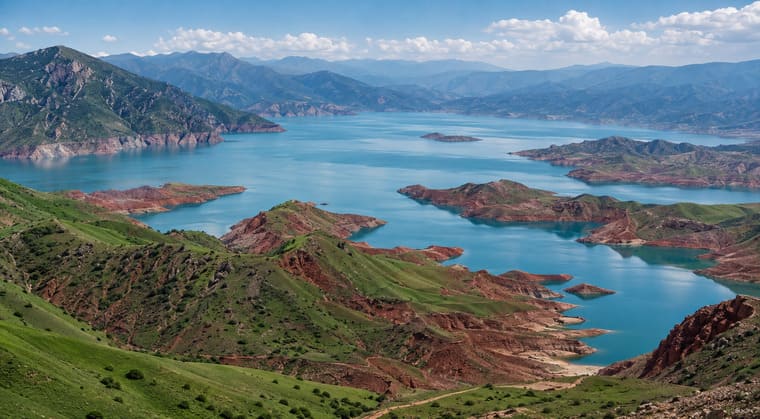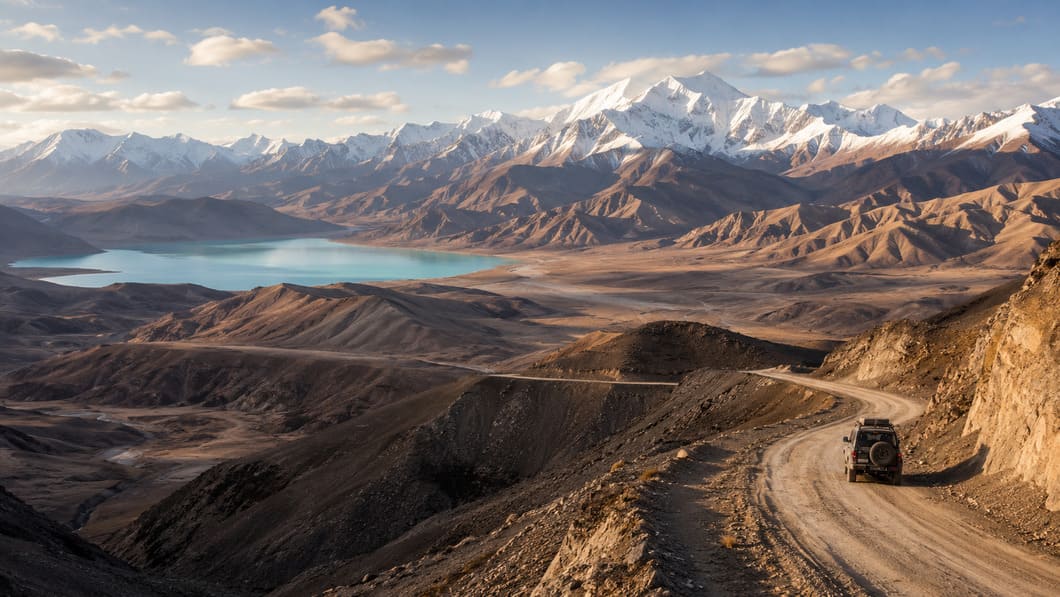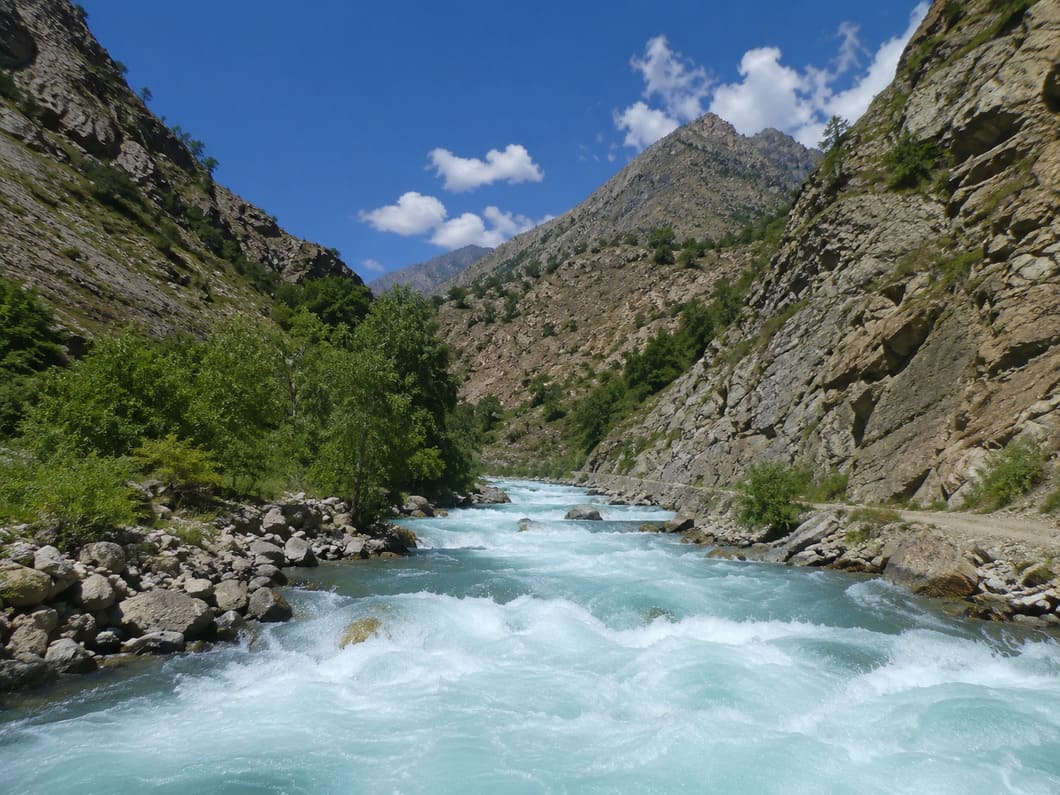
If you are planning to travel along the Pamir Highway, through Khorog, the Wakhan Valley, Murghab or Karakul, entering Tajikistan is only the first step.
Most of the classic Pamir route lies within the Gorno-Badakhshan Autonomous Region, usually abbreviated as GBAO. Foreign travellers need a separate GBAO permit to enter and travel through this region.
The most important thing to understand is:
a Tajikistan visa and a GBAO permit are two different things.
You may be able to enter Tajikistan without a visa and still need a GBAO permit to travel through the Pamirs.
For example, travellers from the United States and EU countries can currently enter Tajikistan visa-free for stays of up to 30 days, but they still need a permit if their itinerary continues into GBAO.
British passport holders are different: UK citizens currently need a visa for Tajikistan and, if travelling to the Pamirs, a GBAO permit as well.
This guide explains how the system works in practice, how much the permit costs, how long the process normally takes and what you should know before setting off on the Pamir Highway.
Information updated: September 2026.
GBAO Permit at a Glance
| Question | Current practical answer |
|---|---|
| Who needs it? | Foreign travellers entering GBAO |
| Is it the same as a Tajikistan visa? | No |
| Where is it needed? | Khorog, Wakhan, Ishkashim, Murghab, Karakul and other GBAO areas |
| Sayohat processing time | Usually 2 days, sometimes 1 day |
| Permit through Sayohat | $20 |
| In-person application | Around $5 |
| GBAO add-on with an eVisa | $20 |
| Single-entry eVisa | $30 |
| Single-entry eVisa + GBAO | $50 total |
| Typical eVisa response | Around 7–10 days |
| Kyzyl-Art crossing | Currently operating; no separate crossing permit required |
| Oybek / Jartepa crossings | No special border permit required |
| Best Pamir season | June–October |
Important: visa requirements, permit procedures, fees and border-crossing rules can change. Before every Pamir trip, Sayohat Travel checks the current requirements for the traveller’s nationality, travel dates and planned route.
What Is GBAO?
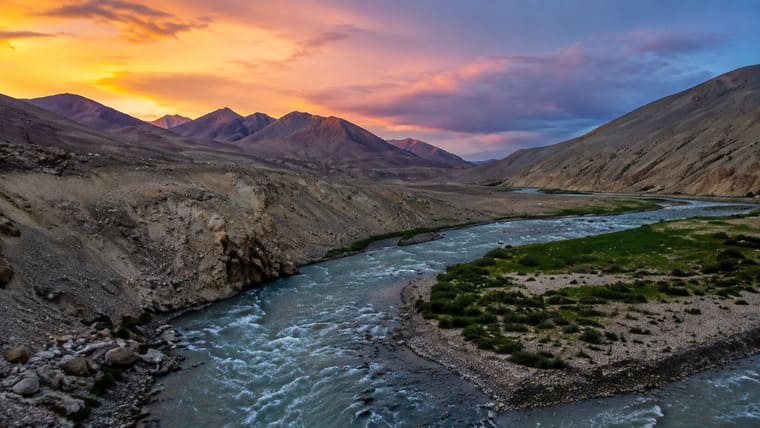
GBAO stands for Gorno-Badakhshan Autonomous Region, the vast mountainous territory covering eastern Tajikistan.
For travellers, this is essentially the heart of the Pamirs.
The region includes or provides access to many of the places travellers come to Tajikistan specifically to experience:
- Khorog
- Ishkashim
- the Wakhan Valley
- Rushan
- Bartang Valley
- Murghab
- Karakul
- Yashilkul
- Bulunkul
- large sections of the Pamir Highway
It is also a sensitive border region. Parts of the route run close to Afghanistan, China and Kyrgyzstan.
Because of this, foreign travellers need additional permission to travel within GBAO.
That permission is the GBAO permit.
If you are considering a full journey through the region, see how these places fit together in our 9-day Pamir Highway Adventure.
Who Needs a GBAO Permit?
Foreign visitors travelling into the Gorno-Badakhshan Autonomous Region need a valid GBAO permit.
This requirement is separate from the rules governing entry into Tajikistan itself.
That distinction is particularly important for travellers from countries with visa-free access.
Travellers from the United States
US passport holders can currently visit Tajikistan visa-free for up to 30 days.
However, visa-free entry does not automatically include permission to travel through GBAO.
If your itinerary includes Khorog, Wakhan, Murghab, Karakul or other parts of the Pamirs, you still need a GBAO permit.
Travellers from the European Union
Citizens of EU countries can currently enter Tajikistan visa-free for short stays of up to 30 days.
Again, visa-free entry into Tajikistan does not replace the GBAO permit.
If your route enters Gorno-Badakhshan, arrange the permit before travelling into the region.
Travellers from the United Kingdom
British passport holders currently need a visa to enter Tajikistan.
For a trip to the Pamirs, they normally need:
- a Tajikistan visa
- a GBAO permit
Depending on the application and individual circumstances, additional supporting documents may occasionally be requested. In practice, this can sometimes include an invitation or supporting travel letter.
If you are travelling with Sayohat Travel, send us your nationality and proposed itinerary before applying and we can advise which documents should be prepared.
Do US and EU Travellers Need a Tajikistan Visa?
For short tourist visits, the process is relatively straightforward.
US citizens and citizens of EU countries can currently enter Tajikistan visa-free for up to 30 days.
For example, an American, German, French, Italian or Dutch traveller visiting Tajikistan for two weeks would normally not need to obtain an eVisa simply to enter the country.
However, there is an important distinction:
Visa-free does not mean permit-free.
If your itinerary includes the Pamirs, you still need a separate GBAO permit.
For many travellers, the process is therefore simply:
passport + visa-free entry + GBAO permit.
Do UK Citizens Need a Visa for Tajikistan?
Yes.
The United Kingdom is currently not included in Tajikistan’s 30-day visa-free regime for ordinary British passport holders.
British travellers therefore need to arrange a visa before entering Tajikistan.
For many travellers, an electronic visa is the most practical option.
If the trip also includes the Pamirs, the traveller normally needs:
Tajikistan visa + GBAO permit.
Additional documents may sometimes be requested depending on the application.
For this reason, British travellers should arrange their paperwork well before a fixed multi-country or overland itinerary.
How Much Does a Tajikistan eVisa Cost?
The current basic electronic visa fees are:
| Application | Fee |
|---|---|
| Single-entry eVisa | $30 |
| GBAO permit added to the application | +$20 |
| Single-entry eVisa + GBAO | $50 total |
These are the visa and permit fees themselves and do not include separate Sayohat Travel assistance or service charges where applicable.
This also explains why different websites sometimes quote different eVisa prices.
You may see $30 in one place and $50 in another.
Both figures can be correct.
$30 is the standard single-entry eVisa.
$50 is the single-entry eVisa with the $20 GBAO permit included.
If your route does not enter GBAO, there is normally no need to add the permit.
How Long Does the Tajikistan eVisa Take?
Based on our current practical experience, travellers should allow approximately 7–10 days for a response.
Sometimes a decision arrives earlier.
In some cases, additional review can take longer.
For this reason, we do not recommend leaving the application until the final days before your flight or international land crossing.
This is especially important on multi-country itineraries through Central Asia.
For example, if your route includes:
Uzbekistan → Tajikistan → Kyrgyzstan
a delay in the Tajikistan visa can affect hotels, vehicles, guides and border transfers across the rest of the itinerary.
Arrange visas and permits first, then finalise a tight border-crossing schedule.
Can a Tajikistan eVisa Be Refused?
Yes, a refusal is possible.
However, in our experience, refusals for ordinary tourist applications are relatively rare.
No visa should be treated as guaranteed until it has actually been issued.
Problems or delays may occur if an application contains:
- incorrect personal information;
- inconsistent details;
- passport errors;
- an unclear passport scan;
- missing supporting documentation;
- information that requires additional review.
To reduce the risk of problems:
- enter your name exactly as it appears in your passport;
- double-check the passport number and dates;
- upload a clear passport copy;
- apply with enough time before travelling;
- respond quickly if additional information is requested.
How to Get a GBAO Permit
1. Arrange It Through Sayohat Travel
For travellers joining one of our Pamir programmes, this is usually the simplest option.
Sayohat Travel takes care of the GBAO permit for you as part of the trip preparation.
You send us the required passport details and travel dates, and our team handles the permit process and checks the current requirements for your route.
This means you can focus on the journey itself instead of spending time in Dushanbe dealing with local paperwork.
Before departure, we also reconfirm the permit and route requirements so you know that everything needed for your Pamir trip is in order.
For a complete itinerary through Khorog, Wakhan, Murghab and Karakul, see our Pamir Highway Adventure.
2. Apply in Person
Independent travellers can also apply locally in person.
The current cost is approximately:
$5
This is the cheapest option.
However, the cheapest option is not always the most convenient.
You need to allow time for visiting the relevant office and waiting for the permit to be processed.
If you have only one day in Dushanbe before departing for the Pamirs, saving around $15 may not be worth reorganising the itinerary around office opening times.
For travellers with a flexible schedule, however, personal application remains an option.
3. Add GBAO to an eVisa Application
If your nationality requires an electronic visa, you can add the GBAO permit during the visa process.
The calculation is simple:
single-entry eVisa — $30
plus
GBAO permit — $20
equals
$50 total
We recommend allowing approximately 7–10 days for the eVisa decision.
If your nationality already qualifies for 30-day visa-free entry into Tajikistan, you normally do not need to purchase an eVisa just to obtain permission for the Pamirs.
The GBAO permit can be arranged separately.
What Documents Do We Need to Arrange the GBAO Permit?
When Sayohat Travel arranges the permit, we normally need basic passport and travel information.
This includes:
- full name exactly as shown in your passport;
- nationality;
- passport details;
- travel dates;
- planned Pamir route.
We recommend sending this information before you arrive in Tajikistan.
Do not wait until the morning you are planning to leave for the Pamirs.
The permit may be checked along the route, so it should be organised before departure.
Where Is the GBAO Permit Required?
The permit applies to travel within the Gorno-Badakhshan Autonomous Region.
On a classic Pamir journey, you should expect to need it for routes involving:
- Khorog
- Ishkashim
- Wakhan Valley
- Rushan
- Bartang Valley
- Murghab
- Karakul
and other destinations within GBAO.
Your documents may be checked during the journey.
Keep your passport and permit accessible rather than packed deep inside your luggage.
Keeping an electronic copy on your phone is also sensible as a backup, but it should not replace the required issued document.
Where Is a GBAO Permit Not Required?
A GBAO permit is specifically for travel in Gorno-Badakhshan.
You do not need one simply because you are travelling in the mountains of Tajikistan.
For example, it is not normally required for trips to:
- Dushanbe
- Hisor
- Penjikent
- the Fann Mountains
- Iskanderkul
- the Seven Lakes
- Khujand
This is a common source of confusion for first-time visitors.
The Pamirs and the Fann Mountains are both spectacular mountain regions, but they have very different geography, logistics and permit requirements.
If you are deciding between them, read our Fann Mountains travel guide.
What Happens If You Travel Without a GBAO Permit?
The GBAO permit should not be treated as optional paperwork.
There are checkpoints in the region, and passports and permits may be inspected.
Without the required permission, you may be prevented from continuing further into GBAO.
On a multi-day Pamir journey, this can cause more than a minor inconvenience.
When Is the Best Time for the Pamir Highway?
Our practical Pamir season runs from June to October.
This is the period in which we operate our regular Pamir programmes.
June
June marks the beginning of the Pamir season.
Conditions early in the month can still depend on the previous winter, snow levels, meltwater and the state of individual roads.
July and August
These are the central summer months.
They generally offer the widest choice of classic Pamir routes.
September
September remains a full Pamir travel month.
Temperatures become cooler, particularly at altitude, but regular road journeys continue.
October
We still operate Pamir journeys in October.
However, this is the edge of the season.
Days become shorter, nights colder and programmes require more flexibility.
For a complete month-by-month overview, read our guide to the best time to visit Tajikistan.
What Is the Travel Season Elsewhere in Tajikistan?
The GBAO permit concerns the Pamirs, but many travellers combine GBAO with other parts of Tajikistan.
The country’s overall travel season is much broader.
March — Navruz, culture and spring programmes.
April–May — cities, valleys and increasingly accessible natural areas.
June–September — the main Fann Mountains season.
June–October — regular Pamir programmes.
November — cities, culture and lower-altitude itineraries.
December — winter programmes and Safed Dara when snow conditions allow.
We do not include Iskanderkul in our regular winter programmes.
That is why asking whether Tajikistan is simply “in season” or “out of season” is not very useful.
A better question is:
which part of Tajikistan is right for your travel dates?
How Sayohat Travel Arranges GBAO Permits
If you book a Pamir journey with Sayohat Travel, we can help arrange the GBAO permit as part of your trip preparation.
Simply contact us before your journey, and our team will explain what is required and guide you through the process.
We check the current requirements for your route and provide the latest information before departure, so you do not have to spend time dealing with local paperwork on your own.
If your nationality also requires a Tajikistan visa, we will let you know what needs to be arranged in advance. If you can enter Tajikistan visa-free, we will explain how the GBAO permit is handled separately.
Our 9-day Pamir Highway Adventure travels through Khorog, Wakhan, Murghab, Karakul and other major Pamir destinations.
For travellers with less time, there is also our 4-day Pamir Highway Tour from Dushanbe.
Before departure, we reconfirm the current permit requirements for your itinerary, as procedures and access rules can change.
Before You Travel
Visa policies, GBAO permit procedures, application fees, processing times and border-crossing arrangements can change, sometimes at relatively short notice.
This is particularly important on routes through the Pamirs and at international land borders.
Before every trip, the Sayohat Travel team checks the latest available requirements for your nationality, travel dates and planned itinerary.
If your journey includes GBAO or an international border crossing, we will confirm which visas, permits and travel documents are required before departure.
This means you do not have to rely only on an article that may have been published months before your trip.
Send us your nationality, travel dates and planned route, and we will check the current requirements for your journey.