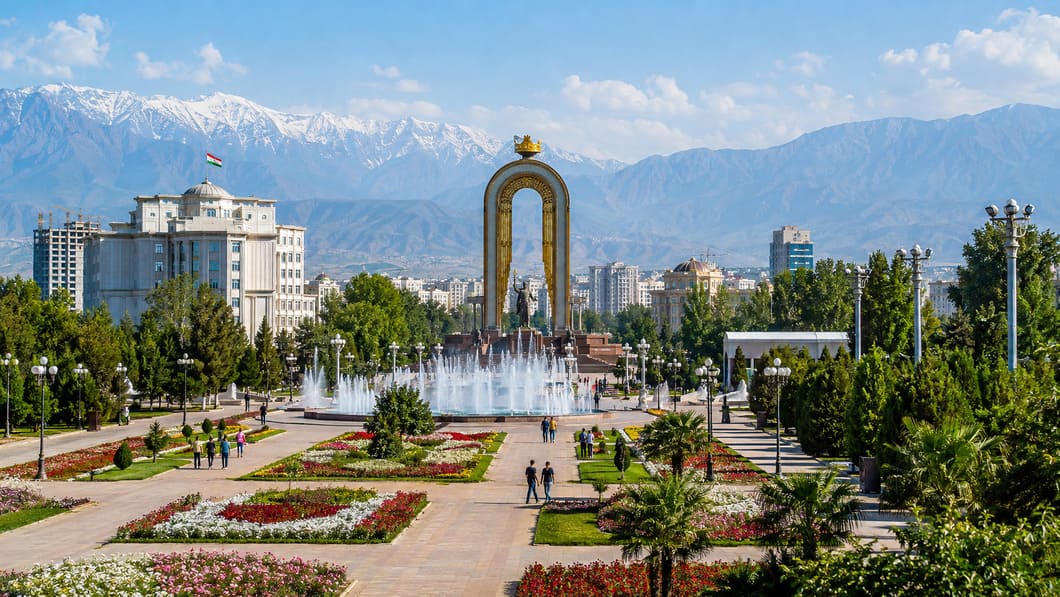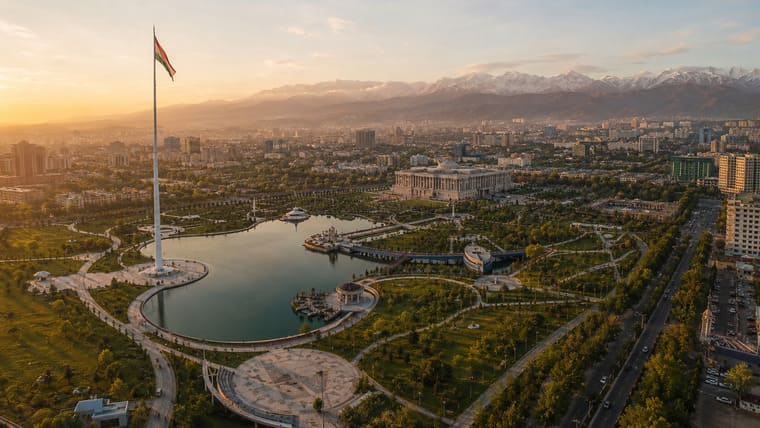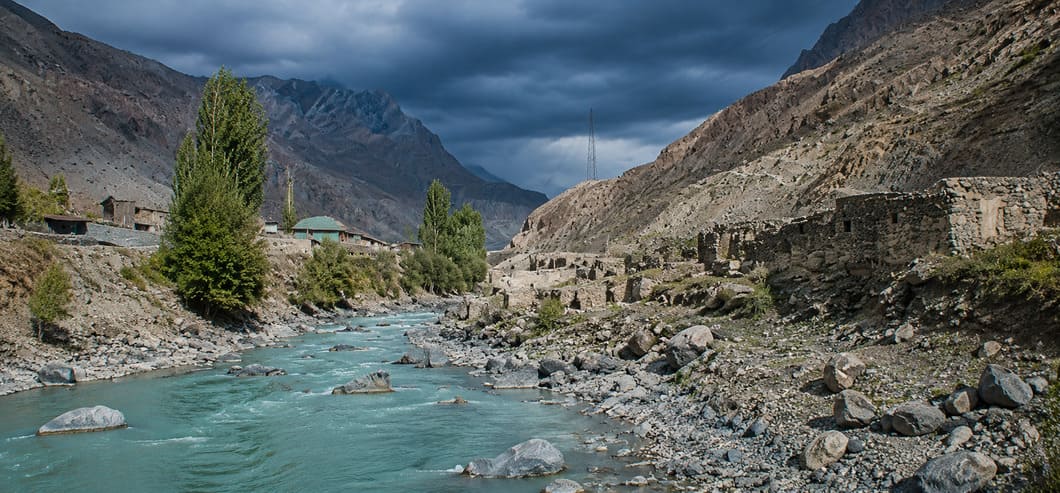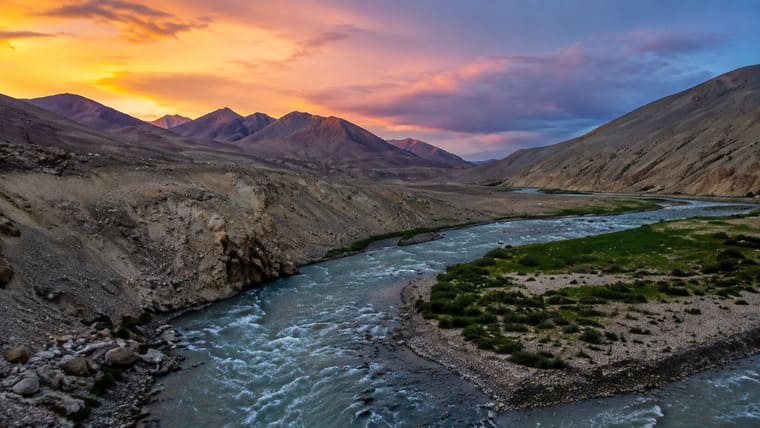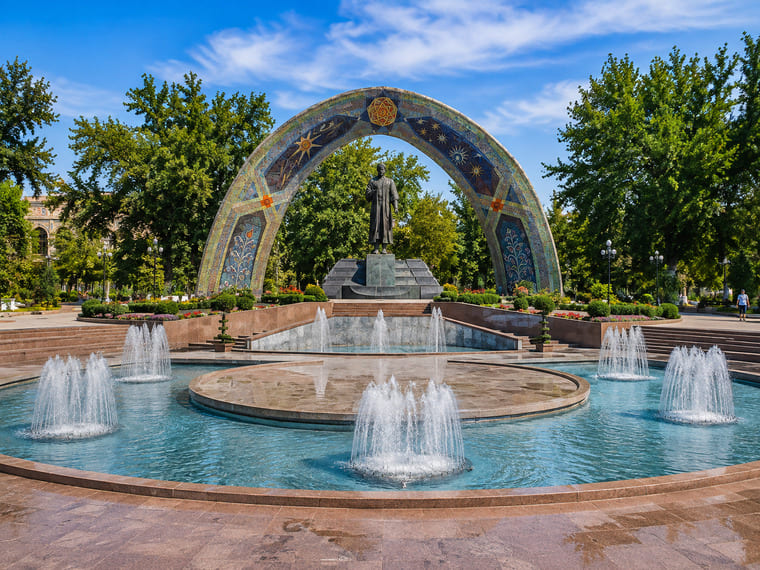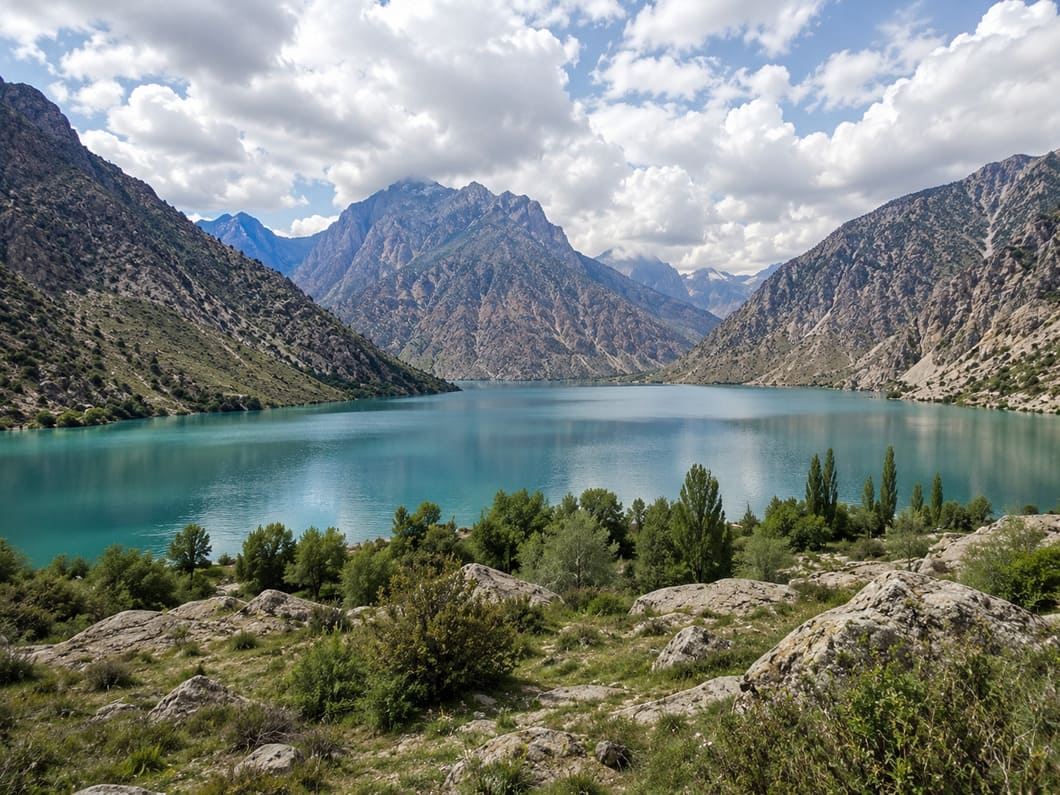
There is no single answer to the question “When is the best time to visit Tajikistan?”
The country changes dramatically with altitude. While spring may already be in full swing in Dushanbe, snow can still cover the high mountain passes. In July, the capital can be hot and dry, while evenings in Murghab or beside a high-altitude lake may still call for a warm jacket.
That is why the best time to travel depends first of all on where you want to go.
The Pamirs have one season. The Fann Mountains have another. Navruz belongs to March, while winter brings a completely different travel experience around Dushanbe and Safed Dara.
At Sayohat Travel, we run trips in every season. March marks the beginning of the main spring travel calendar with Navruz and cultural programmes. Summer opens the high mountains and the Pamirs. Autumn is ideal for road trips and sightseeing, while winter brings Safed Dara and shorter programmes around Dushanbe.
The simplest overview is this:
The Pamirs — June to October.
The Fann Mountains — mainly June to September.
Iskanderkul — the warmer months; we do not include it in our regular winter programmes.
Dushanbe and cultural routes — possible for much of the year.
Safed Dara — a winter destination, usually from December to March.
Below, we break the season down month by month and region by region.
Tajikistan Travel Seasons at a Glance
For trip planning, it is more useful to look not only at temperature but also at the actual accessibility of each route.
| Month | Dushanbe & Cities | Iskanderkul & Fann Mountains | Pamirs | Best For |
|---|---|---|---|---|
| January | City trips possible | Not included in our winter programmes | Not the season for standard tourist groups | Safed Dara, Dushanbe, winter breaks |
| February | City programmes possible | Not the main season | Not the season for classic Pamir trips | Safed Dara, short winter programmes |
| March | Start of the active Sayohat season | High mountains still in winter conditions | Not the season | Navruz, Dushanbe, Hisor, culture and food |
| April | Pleasant for sightseeing | Some areas depend on snow and road conditions | Not the main season | Blossoms, cities, valleys, excursions |
| May | Excellent | Iskanderkul and some mountain areas possible depending on conditions | Usually too early for standard programmes | Nature, cities, foothills, combined trips |
| June | Hotter, especially later in the month | Main mountain season begins | Start of our Pamir season | Iskanderkul, Fanns, Pamirs, longer journeys |
| July | Hot | High season | High season | Pamir Highway, Wakhan, Murghab, trekking |
| August | Hot and dry | High season | High season | Almost all classic mountain routes |
| September | More comfortable | Very good season | Full season | Pamirs, Fanns, lakes, sightseeing |
| October | Good autumn period | Weather-dependent; high trekking season winds down | We still run Pamir trips — end of the season | Pamirs, cities, valleys, autumn road trips |
| November | City and cultural trips | Iskanderkul removed from winter programmes | Classic season finished | Dushanbe, Khujand, history, food |
| December | Winter city programmes | Not part of our regular winter routes | Not the classic Pamir season | Safed Dara, snow and winter holidays |
This table is a practical guide, not a promise of specific weather on a particular date.
In the mountains of Tajikistan, route conditions depend on more than the month. Snowfall during the previous winter, spring meltwater, rainfall, road conditions, landslides, temperatures at altitude and the state of individual passes all matter.
That is why we always distinguish between the calendar season and the actual conditions on the route.
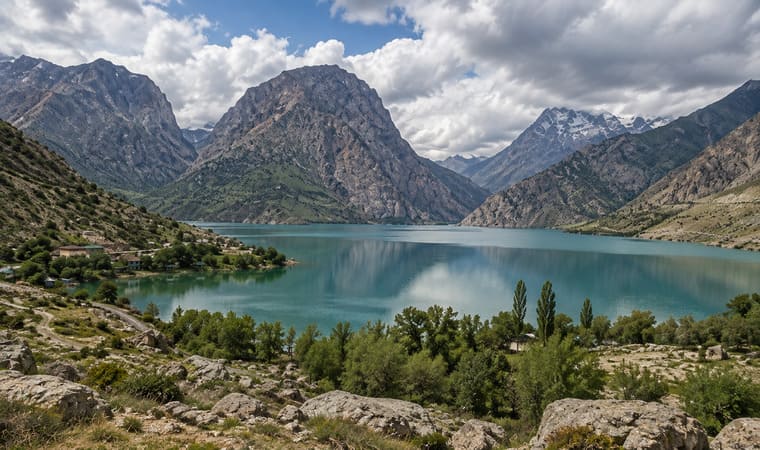
Why the Season in Tajikistan Depends on Altitude
One of the defining features of Tajikistan is the enormous difference in altitude between its regions.
You can spend the morning in warm Dushanbe and, only a few hours later, find yourself in a mountain landscape where the temperature is dramatically lower.
On a long journey through the country, the climate can change several times in a single day.
For travel purposes, Tajikistan can roughly be divided into three altitude zones.
The first is the cities and valleys: Dushanbe, Khujand, Hisor, Penjikent, Kulob and other relatively low-lying areas.
Spring arrives earlier here and autumn lasts longer, so cultural and sightseeing programmes have the longest travel season.
For a first introduction to the country, our guide to what to see in Tajikistan and how to plan a one-week route is a useful place to start.
The second zone is the Fann Mountains and middle-altitude mountain areas.
This includes Iskanderkul, Artuch, the Kulikalon Lakes, the Alaudin Lakes and many other popular nature destinations.
Spring arrives later here than in Dushanbe, while autumn conditions set in earlier.
The third zone is the Pamirs: Khorog, the Wakhan Valley, Murghab, Karakul, high-altitude lakes and mountain passes.
Here, altitude has the strongest influence on the travel calendar.
This is why it is a mistake to choose your travel dates based only on the weather forecast for Dushanbe.
Choose the route first. Then choose the month.
March: Navruz and the Beginning of the Travel Calendar
For Sayohat Travel, March is not a “dead season”.
Quite the opposite: it marks the beginning of the main spring travel calendar.
The highlight of the month is Navruz, one of the most important celebrations in Tajikistan.
Cities become livelier, public celebrations take place, traditional dishes are prepared and families gather to welcome spring.
For travellers, it is an opportunity to see Tajikistan not only as a mountain destination but also as a country of living traditions.
March is well suited to Dushanbe, Hisor, food experiences, bazaars, museums, cultural programmes and accessible trips through the valleys.
Higher in the mountains, however, it is still winter.
That means a March itinerary should not be treated as an early version of a July mountain tour. High-altitude Pamir routes and serious trekking in the Fann Mountains are better left for later in the year.
For travellers particularly interested in culture, traditions and local life, March can be one of the most rewarding times to visit.
If this is your first trip to the country, our guide to the main places to see in Tajikistan and a possible one-week itinerary will help you understand how Dushanbe, history and nature can fit together.
April: Blossoms, Green Valleys and Comfortable Cities
By April, Tajikistan is turning green.
For city sightseeing and cultural travel, this is a very pleasant time of year. The intense summer heat has not yet arrived, daylight hours are getting longer and spring is well established in the valleys.
Routes through Dushanbe and Hisor work particularly well, along with cultural programmes and journeys through the lower-lying parts of the country.
There is more time to enjoy markets, museums, architecture, local food and walks without having to organise the entire day around summer heat.
Higher in the mountains, conditions are very different.
Snow may still be deep, so April should not be presented as the beginning of the full Pamir or Fann Mountains season.
It is better suited to travellers who want to experience Tajikistan in spring without making the highest passes the central purpose of the trip.
For a short journey based around the capital, one option is our Tajikistan: The Capital and the Mountains tour, combining Dushanbe, Hisor and the mountain scenery around Varzob.
May: Between Spring and the Main Mountain Season
May is a transition month.
Dushanbe and the valleys are already warm, but the peak summer heat has not yet arrived.
At the same time, more roads and nature destinations gradually become accessible in the mountains.
This makes May particularly good for a combined journey bringing together cities and nature without depending on the highest mountain passes.
Trips towards the Fann Mountains and Iskanderkul may already be possible, but the final decision should always be based on actual road and weather conditions.
There is one important principle to remember:
Warm weather in Dushanbe does not mean that every high-altitude route is already open.
Snow remains on the passes far longer than it does in the valleys.
May therefore works especially well for travellers who are happy to combine cities, historical sites, valleys and accessible mountain destinations rather than building the whole trip around one particular high-altitude trek.
For more detail about the region, read our complete guide to the Fann Mountains in Tajikistan.

June: The Main Mountain Season Begins
June is the month when Tajikistan’s travel map expands dramatically.
The valleys get hotter, while more and more mountain destinations become accessible.
Most importantly, June marks the beginning of our regular Pamir season.
This is an important point.
We do not limit Pamir travel to July, August and September. In practice, Sayohat operates Pamir programmes from June through October.
June is, however, the beginning of that season.
On some routes, the effects of winter and spring can still be felt. Side roads may depend on snowmelt and water levels, so programmes may require more flexibility than they do in the middle of summer.
But the Pamirs are already a full travel destination.
At the same time, June marks the beginning of the main period for the Fann Mountains.
Iskanderkul, the Seven Lakes, accessible hiking routes and road journeys can all be combined with Dushanbe, Penjikent and other destinations.
If you want to understand the difference between Iskanderkul, Artuch, the Kulikalon Lakes, the Alaudin Lakes and full multi-day trekking, see our Fann Mountains travel guide.
July: High Season in the Mountains
July is one of the key months for a major journey through Tajikistan.
The Pamirs are in season.
The Fann Mountains are in season.
The main summer road routes are running.
Travellers can plan high-altitude lakes, long mountain drives, the Wakhan Valley, Murghab and multi-day trekking.
There is one important contrast: Dushanbe and the lower valleys can be very hot in summer.
A July itinerary therefore often works best when the capital forms the beginning or end of the journey rather than the entire trip.
One or two days in Dushanbe gives you enough time to discover the capital before heading higher into the mountains, where temperatures become more comfortable and the classic high-altitude landscapes begin.
July is particularly well suited to travellers who want a full Pamir Highway journey.
Our 9-day Pamir Highway Adventure travels through Khorog, the Wakhan Valley, Murghab, Karakul, high-altitude lakes and some of the region’s most memorable landscapes.
Even in July, however, you should not pack only according to the forecast for Dushanbe.
At altitude, warm clothing is essential.
The Pamirs remain the Pamirs even in the middle of summer.
August: Maximum Choice for Mountain Travel
August is another central month of the mountain season.
Almost the entire classic range of Tajikistan experiences is available: the Pamirs, Wakhan, Murghab, Karakul, Iskanderkul, the Fann Mountains, the Seven Lakes, multi-day road journeys and trekking.
For first-time visitors whose main priority is mountain scenery and who want the broadest possible choice of routes, August is one of the easiest months to plan.
Comfort, however, depends strongly on altitude.
The valleys can be hot.
Higher in the mountains, evenings and nights may still be cold.
This contrast is one of the reasons a single temperature figure can never properly describe the climate of Tajikistan.
During one journey you may effectively pass through several climate zones.
A first trip does not necessarily need to go straight to the remote Pamirs.
More compact routes combine cities, history and the Fann Mountains. For example, our Tajikistan Highlights Tour combines Dushanbe, Hisor, Nurek, Kulob and Iskanderkul in a six-day itinerary.
September: One of the Most Versatile Months
September often provides an excellent balance.
Dushanbe becomes more comfortable after the intense summer heat, while the main mountain destinations remain fully in season.
The Pamirs are operating.
The Fann Mountains are operating.
Iskanderkul remains part of our programmes.
Long road journeys and walking routes are still possible.
At the same time, travellers benefit from milder conditions in the valleys, softer autumn light and gradually changing colours in the landscape.
For the Pamirs, September is not simply “the end of summer”.
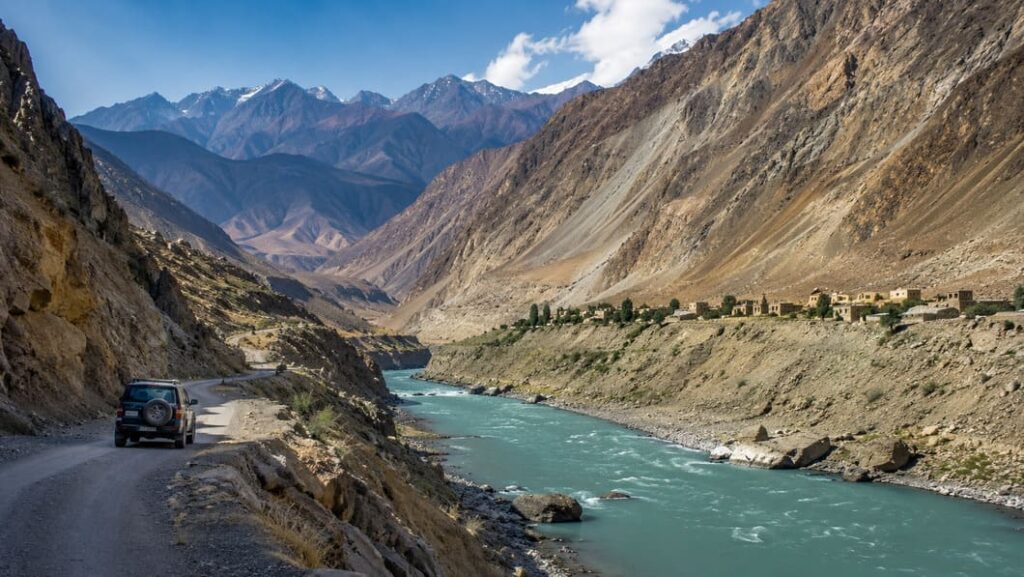
It is a full part of the travel season.
During the second half of the month, temperatures at altitude become noticeably colder, so appropriate equipment is increasingly important. For road-based itineraries, however, September remains an excellent time to travel.
It also suits classic combined journeys.
Our 8-day Grand Tajikistan Tour combines cities, historical sites, the Seven Lakes, the Fann Mountains and Iskanderkul in a broader journey across the country.
October: The Pamir Season Is Still Running
October is one of those months that cannot simply be described as “the season is over”.
For Sayohat, the Pamir season runs from June through October.
That means we still operate Pamir journeys in October.
But it is the edge of the season, and travellers should understand what that means.
Days are shorter.
Nights are colder.
The chance of snow at higher elevations increases.
Weather has a greater influence on the timetable.
An October journey through the Pamirs is therefore not simply an August trip with fewer visitors.
It has a different character.
The reward is equally different: clear cold air, autumn light, quieter roads and a more austere high-mountain landscape.
The key principle for October is simple:
do not expect a mountain itinerary to operate according to a rigid summer timetable.
If the weather requires the programme to change, the logistics need to allow for that flexibility.
This is precisely why autumn Pamir travel is best organised with a local team that understands the actual road conditions rather than relying only on a route drawn on a map.
You can see how a complete itinerary is structured in our Pamir Highway Adventure.
November: Not the End of Travel, but a Change of Format
By November, the classic high-altitude summer season is ending.
That does not mean travel in Tajikistan stops.
The format simply changes.
Instead of trekking across mountain passes, the focus shifts towards Dushanbe, other cities, bazaars, museums, local food, history, crafts and accessible road trips.
This is a good time to stop trying to fit everything into one journey and instead build the trip around a particular theme.
You might spend several days in Dushanbe, visit Hisor, explore the south of the country or create a cultural itinerary across several cities.
For a city-focused journey, the Complete Dushanbe Experience combines the capital, Hisor, Varzob, museums, markets and local culture.
There is also an important seasonal limitation:
we close Iskanderkul for our regular winter programmes.
Even if a vehicle might technically reach the area on a particular winter day, that does not automatically make it suitable for a normal sightseeing excursion.
For us, the important question is not whether a car can theoretically get through.
It is whether the journey can be organised properly, safely and comfortably.
December: Safed Dara Season Begins
In December, Tajikistan switches into its winter format.
The main winter mountain destination near Dushanbe is Safed Dara.
This is no longer the summer world of high-altitude lakes and long road expeditions.
Instead, the focus turns to snow, mountain scenery, cable cars, skiing, snowboarding and winter escapes from the capital.
The usual Safed Dara season runs approximately from December to March, although the actual opening and quality of skiing depend on snow cover each year.
That is why we do not promise skiing simply because the calendar says December.
Before every winter trip, we check the actual conditions.
This is another example of the basic rule for Tajikistan:
the calendar gives you a season, but real conditions determine the exact programme.

When Is the Best Time to Visit the Pamirs?
If the Pamirs are the main purpose of your journey, our practical rule is simple:
Sayohat’s Pamir season runs from June to October.
But those five months are not identical.
June is the beginning of the season. Trips are already possible, although some sections are more strongly affected by the winter that has just ended and by spring meltwater.
July and August are the central summer months, when the widest range of classic itineraries is available.
September remains a full part of the season, with cooler conditions.
October is the end of our regular season. We continue to operate trips, but itineraries require greater flexibility and closer attention to actual weather conditions.
There is another important distinction.
The Pamir Highway is not a tourist attraction that is physically “opened” on 1 June and “closed” on 1 November.
People live along these roads and use them outside the tourist season.
But technical road access and a normal tourist season are not the same thing.
Winter travel through the Pamirs calls for a very different approach, suitable vehicles, more spare time and a willingness to deal with difficult conditions.
For a standard tourist journey, we recommend planning within the June–October window.
For a complete route through Wakhan, Murghab, Karakul and the high-altitude lakes, see our 9-day Pamir Highway Adventure.
When to Visit the Fann Mountains
The Fann Mountains follow a different calendar.
For most travel programmes, the main period is June to September.
In June, the full season begins, although conditions on the highest passes can still vary from year to year.
July and August are the core months for multi-day trekking.
September remains a very good season, particularly for travellers who prefer cooler weather.
It is important, however, not to think of the Fann Mountains as one single route.
A road trip to Iskanderkul is one thing.
Several days around Artuch are another.
A multi-day high-altitude crossing over mountain passes is something else entirely.
That is why the phrase “the Fann Mountains are open” does not tell you very much on its own.
The altitude and difficulty of the specific route matter.
We explain the main areas, routes and trekking options in detail in our complete Fann Mountains guide.
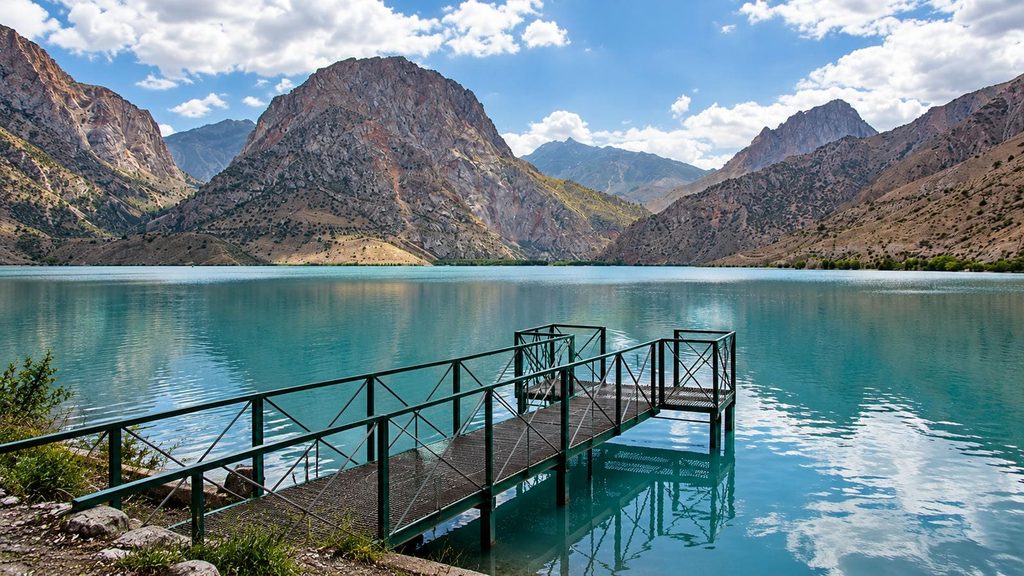
When to Visit Iskanderkul
Iskanderkul is one of Tajikistan’s best-known natural destinations and a perfect example of why travel seasons should be considered by location rather than by country as a whole.
The lake lies in the mountains, so its weather and road conditions differ significantly from Dushanbe.
The clearest and most reliable time for a classic trip is during the warmer part of the year.
Summer is the main season.
In May and October, we make decisions according to actual conditions.
In winter, we do not include Iskanderkul in Sayohat’s regular programmes.
This is worth knowing when choosing your dates.
If a traveller arrives in Tajikistan in winter, we will not sell a summer itinerary simply because the lake looks spectacular in photographs.
We will suggest a route that makes sense for the season.
During the warmer months, Iskanderkul is easy to include even in a relatively short visit.
Travellers who want to see the lake without committing to a longer journey can choose our Iskanderkul and the Fann Mountains Day Trip from Dushanbe.
It is a good introduction to the Fann Mountains when there is not enough time for a multi-day trek.
When Is the Best Time to Visit Dushanbe?
Dushanbe has the longest travel season of the country’s major destinations.
The city can be visited at almost any time of year, although the experience changes with the season.
In March, Navruz is the main attraction.
April and May suit travellers who enjoy walking and prefer to avoid the summer heat.
In summer, Dushanbe works well as the starting and finishing point for a major mountain route.
September and October bring more comfortable conditions for longer city excursions.
In late autumn and winter, the capital remains the basis of cultural programmes and can be combined with nearby winter destinations.
Travellers interested primarily in history, architecture, museums, bazaars and food therefore do not need to restrict themselves to the summer high season.
For a concentrated introduction to the capital, see the Dushanbe City Tour. For a longer stay, the Complete Dushanbe Experience adds Hisor, Varzob, markets and cultural attractions.
When to Visit the Lakes of Tajikistan
Different lakes in Tajikistan have completely different seasons.
Iskanderkul fits relatively easily into a classic journey through the Fann Mountains.
The Seven Lakes require different logistics.
The high-altitude lakes of the Pamirs lie in an entirely different climate zone.
So saying “I want to see the lakes of Tajikistan” is not enough to determine the best month.
The first question is: which lakes?
For a short journey from Dushanbe, Iskanderkul is one of the most practical choices.
For a combination of nature, Penjikent and the Fann Mountains, the Seven Lakes work well.
If your goal is Karakul, Yashilkul or Bulunkul, you are already talking about a larger journey through the Pamirs and the June–October travel season.
For a broader overview of how the country’s main nature destinations fit together, see our guide to what to see in Tajikistan.
Spring, Summer, Autumn or Winter: Which Should You Choose?
Every season shows a different side of Tajikistan.
Spring is the season of Navruz, blossom, green valleys, comfortable cities and the first nature trips. March marks the beginning of our main spring calendar, while April and May are well suited to cultural and combined programmes.
Summer belongs to the high mountains. From June, the Pamir season begins, while the Fann Mountains and Iskanderkul move into their main travel period. July and August offer the widest choice of high-altitude routes.
Autumn brings cooler cities, softer light and the continuation of the mountain season. September remains an excellent mountain month, while in October we still operate Pamir journeys.
Winter is a different kind of trip. Iskanderkul leaves our regular programme, the classic Pamir season ends, and the focus shifts to Dushanbe, cultural travel and Safed Dara.
There is therefore little value in trying to find one perfect month for the entire country.
The real task is to find the right itinerary for your month.
Which Month Is Best for a First Trip to Tajikistan?
If this is your first visit and you mainly want to see the country’s famous mountains, lakes and dramatic landscapes, the easiest period to plan is usually June through September.
During these months it is simpler to combine several different regions.
But that does not mean the rest of the year is a bad time to travel.
March may be far more interesting than August for someone who wants to experience Navruz and local culture.
April or May may be preferable to July for a relaxed city-based journey.
October can work very well for travellers who want to see the Pamirs in autumn and understand that the weather requires more flexibility.
December suits those who want to combine Dushanbe with a winter mountain experience.
That is why we recommend beginning with two questions rather than asking:
“What is the best month?”
Ask instead:
What do I want to see?
How many days do I have?
Once those two things are clear, choosing the season becomes much easier.
If You Have Only 3–4 Days
On a short trip, there is little value in trying to reach the most remote parts of the country.
A better plan is to get to know Dushanbe, add Hisor or Varzob and, if the season allows, include one nature destination.
During the warmer months, that could be Iskanderkul.
In winter, the mountain element can shift towards Safed Dara.
In spring, cultural and historical routes around the capital work especially well.
For an example of a compact itinerary, see Tajikistan: The Capital and the Mountains.
If You Have About a Week
With six to eight days, you can already experience several sides of Tajikistan.
One option combines Dushanbe, Hisor, southern Tajikistan and the Fann Mountains.
Another connects Dushanbe with Penjikent, northern Tajikistan and mountain landscapes.
The important point is not to try to fit the entire Pamir region and the whole Fann Mountains into the same short journey.
Distances in Tajikistan should never be judged only in kilometres.
A mountain road can take far longer than a map suggests.
For a first journey, you might compare the 6-day Tajikistan Highlights Tour with the 8-day Grand Tajikistan Tour.
The first is more compact; the second brings together a wider range of cities, history and mountain landscapes.
If You Have 9–14 Days
With this amount of time, it becomes possible not simply to visit individual places but to complete a substantial journey.
You can explore the Pamirs properly.
You can build a detailed route through the Fann Mountains.
Or you can combine cities, history and several natural regions.
For the Pamirs in particular, it is important not to turn the journey into a race.
Long drives are part of the experience itself.
The altitude changes.
The landscape changes.
The architecture of the villages changes.
Daily life changes.
Even the sense of distance and space changes as you travel.
If the Pamirs are the main purpose of the trip, it is better to give them enough time than to rush across the region simply to collect place names.
Our 9-day Pamir Highway Adventure shows the structure of a full Pamir journey through Wakhan, Murghab, Karakul and the surrounding high country.
What to Pack: The Season Does Not Cancel the Altitude
Even in summer, a journey through Tajikistan requires clothing for very different temperatures.
This is particularly important in the Pamirs.
You can leave a hot Dushanbe and, only a few days later, find yourself at an altitude where several warm layers are necessary in the evening.
The more altitude variation your itinerary includes, the more useful a layered clothing system becomes.
A summer trip through the Pamirs is not a warm-weather holiday in the conventional sense.
For high-altitude travel, you should have warm layers, protection from wind and strong sun, suitable footwear and clothing that allows you to adapt quickly when temperatures change.
In the Fann Mountains, what you need depends on the format of your programme.
A road trip to Iskanderkul has one set of requirements.
A multi-day trek over high passes has another.
This is why packing should be based not only on the month but also on the highest altitude of your specific itinerary.
Why the Calendar Alone Cannot Guarantee Mountain Conditions
A city excursion is comparatively predictable.
The high mountains are different.
Late snowfall, heavy rain, meltwater, mudflows, road works and local weather conditions can all affect a route.
This matters especially at the beginning and end of the season.
That is why saying “everything is guaranteed to be open in June” would be misleading.
So would saying “everything is definitely closed in October”.
Part of the job of a local tour operator is understanding the difference between a calendar and the real conditions on the ground.
Before departure, we check the route and adjust programme details when necessary.
This is particularly important in the Pamirs, where distances are long, alternative roads are limited and altitude has a major influence on the weather.
The Season in Practice: How We Work
Sayohat Travel works throughout the year: spring brings Navruz and cultural routes, summer brings the Fann Mountains and the Pamirs, autumn is ideal for road and sightseeing programmes, and winter brings Safed Dara.
We operate Pamir trips from June to October. We do not include Iskanderkul in our regular winter programmes.
That is why, for us, Tajikistan cannot simply be divided into “the season” and “the off-season”.
Every month has its own route.
So, When Should You Visit Tajikistan?
If the entire article is reduced to one principle, it is this:
do not choose the month separately from the route.
Want to experience Navruz? Come in March.
Want spring cities, green valleys and comfortable temperatures? Consider April or May.
Want Iskanderkul and the Fann Mountains? Focus mainly on summer and early autumn.
Want the Pamirs? We operate Pamir trips from June through October.
Want the widest choice of high-altitude routes? Look at July, August and September.
Want to see the Pamirs in autumn? October is possible, but be ready for more changeable conditions.
Want a winter holiday? Safed Dara begins its season around December.
And Iskanderkul is not part of our regular winter programme.
Tajikistan is not interesting for only three months of the year.
It simply changes with the seasons.
Spring is the season of Navruz, blossom and green valleys.
Summer belongs to the Pamirs, the Fann Mountains and high-altitude lakes.
Autumn brings clear air, quieter roads and long mountain journeys.
Winter means Dushanbe, snow in the mountains and Safed Dara.
So if your holiday dates are already fixed, you do not necessarily need to search for the “perfect season” and rearrange your calendar around it.
You can do the opposite.
Tell us your month, how many days you have and what you want to see — and we will build the route around the part of Tajikistan that is genuinely in season.
Browse the current Sayohat Travel tours in Tajikistan and Central Asia and compare the available itineraries.